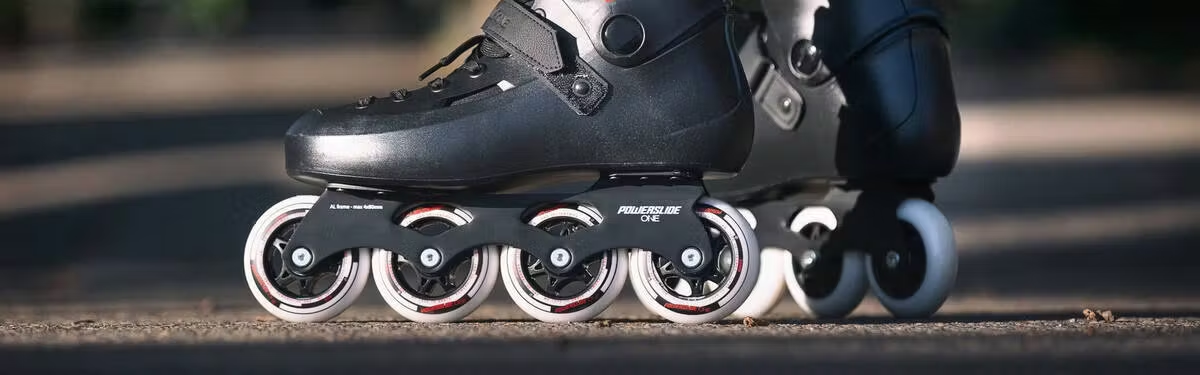
- Wheel size: Impacts speed and agility.
- Durometer: Indicates wheel hardness, influencing speed and the ability to dampen vibrations.
- Rebound: Describes how swiftly the wheel returns to its original form after being compressed.
- Grip: Determines the wheel's ability to hold the surface.
- Wheel profile: Impacts speed and balance.
Overview

Overview
How to Select Inline Skate Wheels?
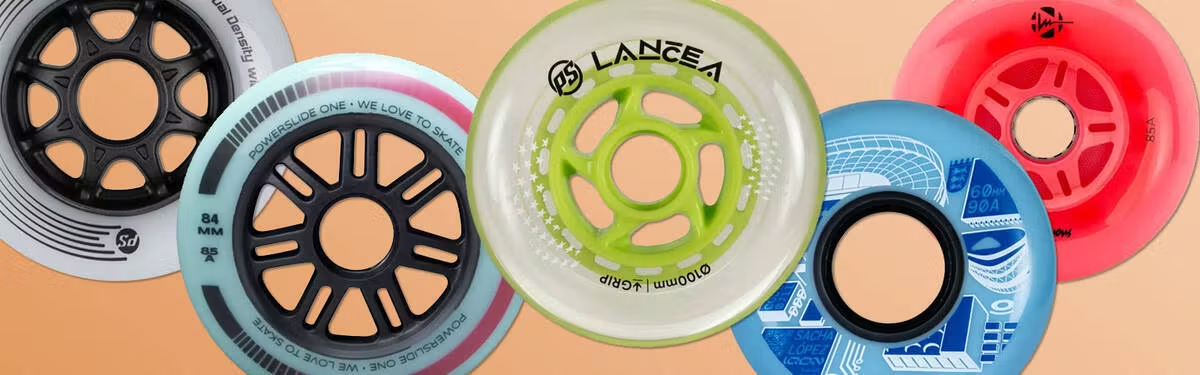
Picking out the right inline skate wheels becomes simpler when you know which wheels are best suited for your skating style.
Regardless of your inline skating discipline, it's essential to consider both wheel size and hardness, ensuring they are matched to the specific surfaces you'll be skating on.
| Inline Skating Style | Features | Size Range / Hardness Range |
| Fitness Skate Wheels |
Smooth rolling Power efficiency
|
80-110 mm 80A-88A |
| Freeskate Wheels |
Quick and agile |
75-110 mm 84A-88A |
| Aggressive Skate Wheels |
Good stability and shock absorption Compact size Flat or round profiles |
55-80 mm 88A-95A |
| Roller Hockey Wheels |
Grippy and nimble Strong acceleration Some designed specifically for indoor use |
65-84 mm 72-84A
|
| Speed Skate Wheels |
Top speed optimization Suitable for indoor, rink, outdoor, and road use |
100 mm-125 mm 83A-90A |
Understanding Wheel Compatibility for Inline Skates
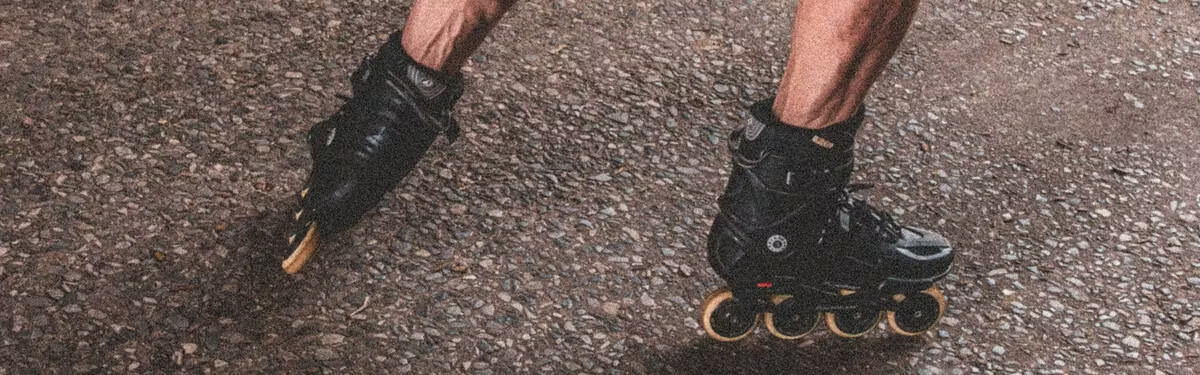
With a standard width of 24 mm, inline skate wheels are easily interchangeable with those designed for your type of skates. Any wheel equal to or smaller than the maximum frame-specified diameter is suitable for your rollerblades.
By understanding factors like hardness, rebound, grip, and profile, you can select wheels that not only fit your skates but also improve their performance.
Discover more, or go directly to our product selection:
Inline Skate Wheel Diameter
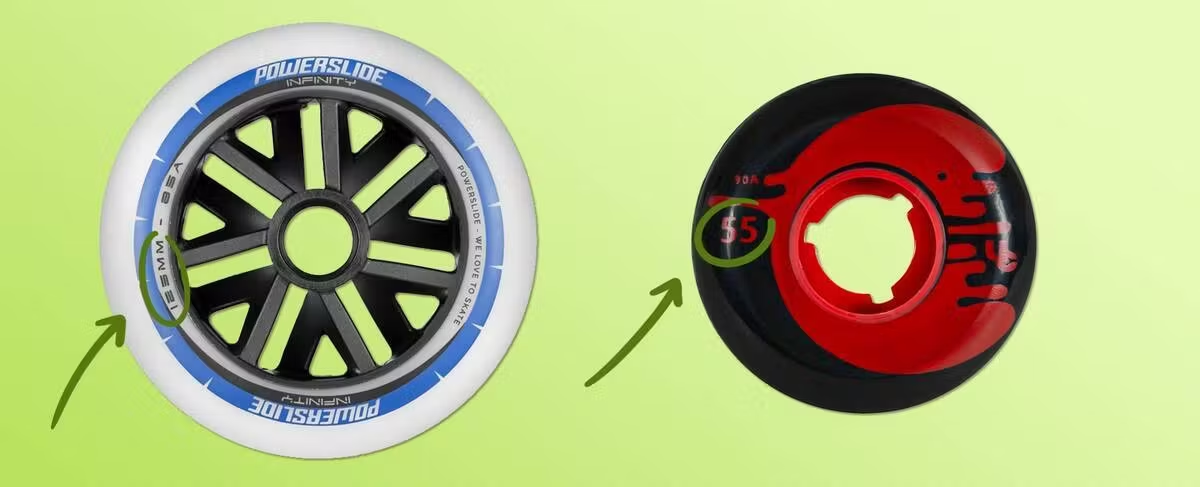
Measuring the diameter in millimetres (mm), you can usually find the size printed on the wheel's side or measure it yourself if uncertain.
The diameter plays a crucial role in affecting characteristics like acceleration and turning ability, along with speed and directional stability.
The following describes how diameter affects skate performance:
- Smaller diameter: Enhances acceleration and provides easier handling.
- Larger diameter: Offers greater top speed and improved directional stability.
Recommended wheel sizes vary according to skating style. Here are our general suggestions:
Inline Skate Wheels Sizing Chart
| Inline Skating Style | Size Range |
| Aggressive Skate Wheels | 55-80 mm |
| Roller Hockey Wheels | 65-84 mm |
| Fitness Skate Wheels | 80-110 mm |
| Freeskate Wheels | 75-110 mm |
| Speed Skate Wheels | 100-125 mm |
Durometer - Wheel Hardness in Inline Skates
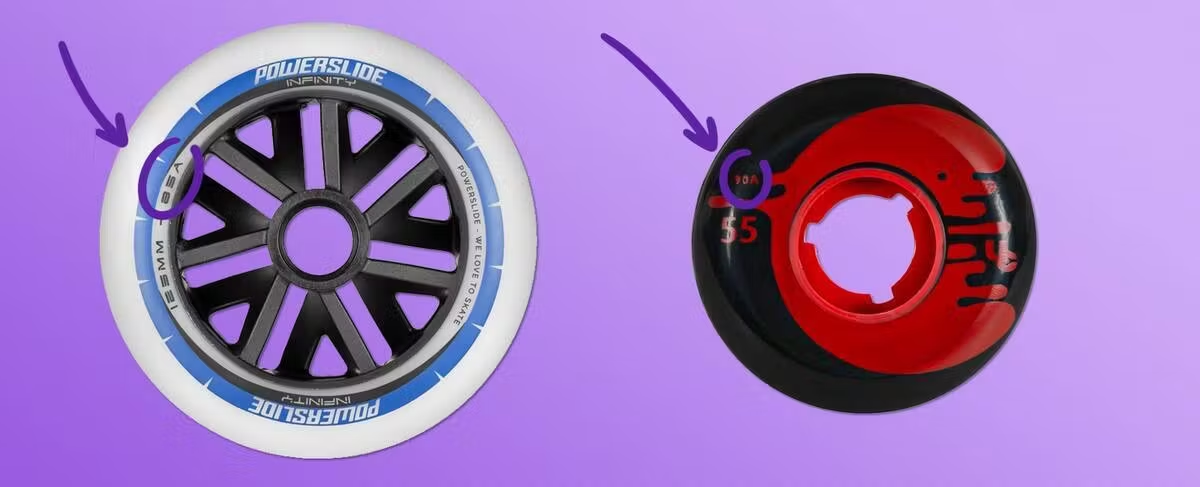
Hardness for rollerblade wheels is measured with a durometer, evaluating the hardness of rubber-like materials. The A-scale is standard for rollerblade wheels, showing a number followed by an A (e.g., 82A), where a higher number means a harder wheel.
This scale allows a quick assessment of wheel hardness, with ratings typically printed on the wheel itself.
Selecting the appropriate hardness is essential and varies with your skating style. See our general guidelines below:
Wheel Hardness Chart for Inline Skates
| Inline Skating Style | Hardness Range |
| Aggressive Skate Wheels | 88A-95A |
| Roller Hockey Wheels | 72A-84A |
| Fitness Skate Wheels | 80A-88A |
| Freeskate Wheels | 84A-88A |
| Speed Skate Wheels | 83A-90A |
Wheel hardness defines performance on various surfaces. Remember to consider this factor carefully as it greatly affects riding experience.
Hard vs. Soft Wheels for Inline Skates
When making a choice between wheels of varying hardness, it's crucial to consider performance differences.
Impact of wheel hardness on your rollerblades:
Advantages of harder wheels- Enables higher speeds
- Offers greater durability
- Provides less grip
- Offers reduced vibration absorption
- Increases grip
- Enhances shock absorption
- Limited speed capability
- Decreases durability
Typically, softer wheels deliver superior shock absorption and better grip, while harder wheels may not cushion vibrations as effectively and exhibit reduced grip.
Alternative Hardness Scales
Some brands use the footprint scale to express the hardness of rollerblade wheels. Here's how the footprint scale roughly translates to the A-scale:
- F0 - approximately 88A
- F1 - approximately 85A
- F2 - approximately 84A
- F3 - approximately 83A
Understanding Wheel Rebound in Inline Skates
The rebound of a wheel indicates how promptly it regains its shape post-compression. With each stride, the wheel is compressed, and if the rebound is high, it returns efficiently to its original form, contributing to speed. Low rebound results in energy from strides being absorbed, not converted into speed, making rebound a crucial factor for speed.
Quality wheels often feature high rebound. This is sometimes branded as SHR urethane, meaning Super High Rebound. Comparing rebound across manufacturers can be challenging, but typically, higher quality and pricier wheels exhibit higher rebound.
The Importance of Grip in Inline Skate Wheels
The grip is determined primarily by the polyurethane (PU) formula characteristics used to fabricate the wheel, with wheel hardness playing a crucial role.
Correlation between hardness and grip:
- Softer wheels: Increase grip.
- Harder wheels: Reduce grip.
The surface you skate on dictates grip effectiveness. Slippery floors, like rinks or indoor parks, require more grip to prevent slipping, while rough terrains such as streets allow for harder wheels without grip issues.
On rougher terrains, consider somewhat harder wheels without worrying about undesirable slippage.
Wheel Profile Varieties for Inline Skates

Inline skate wheel profiles range from flat to pointed shapes. This profile dictates the width of the contact patch between the wheel and the ground. Flatter profiles offer larger contact patches, whereas pointy shapes provide narrower points of contact.
Pointy profiles suit most skating types, including fitness and speed-oriented skates, as they offer reduced friction and rolling resistance, improving efficiency. Their versatility makes them prevalent in the market.
Conversely, flat profiles are typical in aggressive skating as they enhance stability, benefiting trick landings.
Rounded profiles are favoured for freeskating and aggressive skating setups, catering to flat configurations to prevent wheel bite. Their increased control makes them ideal for beginners due to their forgiving nature.
The Core of Inline Skate Wheels: Hubs
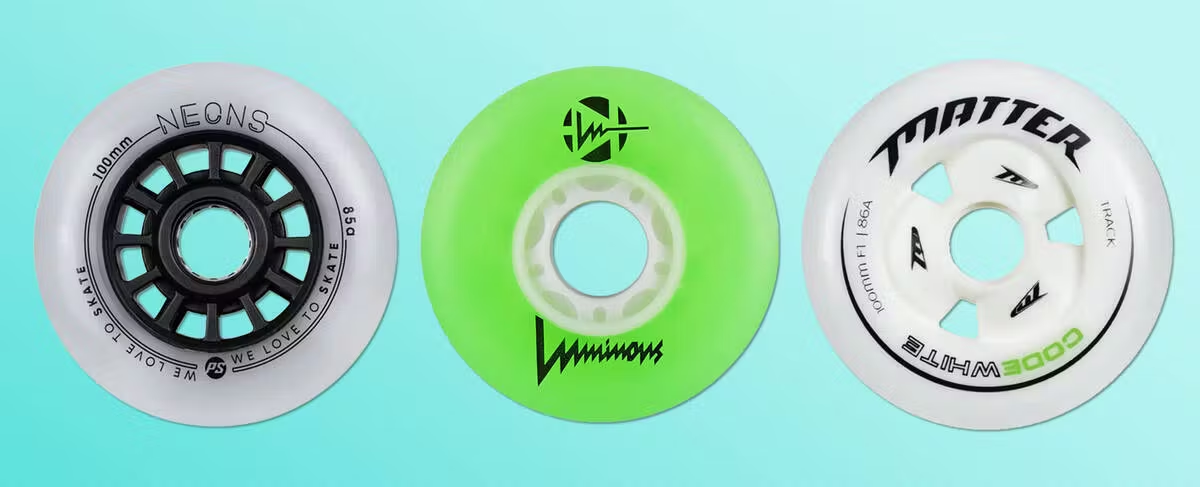
The hub forms the wheel's core, holding the bearings in place. Typically composed of hard plastic or aluminum, the hub's material influences weight and durability, with aluminum offering greater resistance to impacts despite its comparative weight.
Hub categories comprise:
- Solid core: Offers strength with added weight.
- Spoked core: Lighter but less robust than solid cores.
- Hollow core: Balances lightness and durability.
For optimal skate performance, prioritize wheels that are durable yet lightweight, maximizing energy efficiency and minimizing fatigue.
Maintaining Inline Skate Wheels
Proper wheel maintenance extends their lifespan and prevents unnecessary expense, as wheels typically wear the quickest. Regular wheel rotation can enhance wheel longevity and performance.
Wheels naturally wear unevenly, forming a slanted profile. This affects skating technique negatively. Rotate your wheels when this wear pattern emerges.
Refer to our comprehensive guide on wheel rotation:
If you are uncertain about when to replace your inline skate wheels, our guide can help clarify the matter:
For assistance in mounting new wheels, you’ll find the necessary information here:
We offer a comprehensive online guide filled with tips for inline skate upkeep, accessible via this link:
... How About Bearings?
A separate guide focuses entirely on wheel bearings and explains their functionality in detail:
If your ride isn’t as smooth as before, it may be time for a detailed cleaning and lubrication of your bearings: