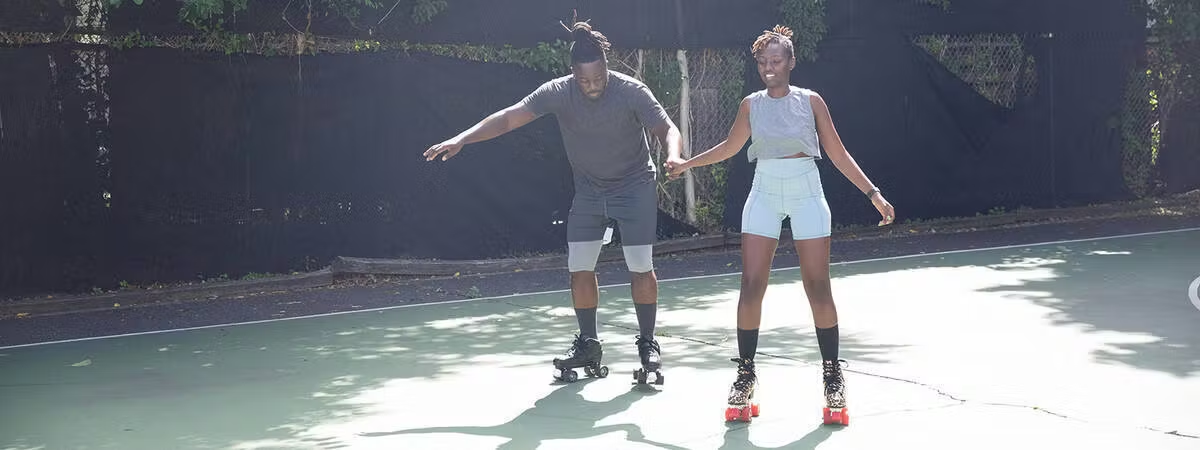
For novices on quad skates, gaining confidence starts with mastering how to brake, manage speed, and properly utilize toe stops safely. This piece covers fundamental techniques like the T-stop, Duckfeet, and Plow, while also detailing practical applications of toe stops such as climbing stairs and handling curbs.
If you've just put on your first pair of quad skates or are looking to refine your basic roller skating skills, this guide provides valuable tips for new skaters.
Executing T-Stops on Roller Skates
The T-stop is a widely used technique for halting on roller skates. You perform it by positioning one skate at a right angle behind the other, dragging gently on the surface to decelerate or come to a safe stop.
Beginners should initially practise on a smooth, level area to prevent tripping or the wheels from snagging. It's crucial to wear protective gear such as knee pads, wrist guards, and a helmet, as beginners may stumble and sway. Taking it slow initially is crucial; speed isn’t essential at the start, and emphasis on balance and correct posture is vital.
This video covers how to execute T-stops on quad skates:
Mastering the T-stop is a vital skill for every quad skater to maintain control, serving as groundwork for advanced stopping techniques. This method offers a secure and effective way to manage velocity and avert mishaps.
Guidelines for Skating Downhill (Safely Staying in Charge)
Descending slopes on roller skates is exhilarating, but prioritizing safety is crucial. Managing your speed is key, and here are some pointers for a seamless experience:
- Start with slight inclines to build assurance, maintain the correct posture by bending your knees, keeping centred weight, and slightly leaning back.
- Utilize the T-stop to decelerate to a stop.
- Control your speed using the "Plow" method or "Duckfeet" (demonstrated in the video).
- Manage speed through lateral weaving or employing wheel edges to slow down.
- Always wear protective gear including a helmet, wrist guards, knee and elbow pads.
Following these guidelines will help you enjoy downhill skating safely while keeping your speed in check.
Technique for Using Toe Stops on Roller Skates
Toe stops, located at the front of most roller skates, are made from rubber or polyurethane. They assist skaters in slowing down, coming to a stop, and maneuvering more adeptly.
To utilize them, bend your knees and lean slightly back to maintain equilibrium. Lightly drag the toe stop to ease speed and press down firmly for a complete halt while leaning slightly forward.
Toe stops are also instrumental for making sharp turns. Beginners are encouraged to practice on level ground to improve balance and apply pressure correctly. Toe stops are a fundamental yet crucial component for enhanced control and assurance in skating.