Selecting skateboard trucks can be challenging, but generally speaking, choosing trucks from a reputable manufacturer and ensuring they match your deck's size significantly increases the likelihood of satisfaction. When you purchase a complete skateboard, the trucks come pre-installed, perfectly complementing the deck's width.
Overview

The Components of a Skateboard Truck
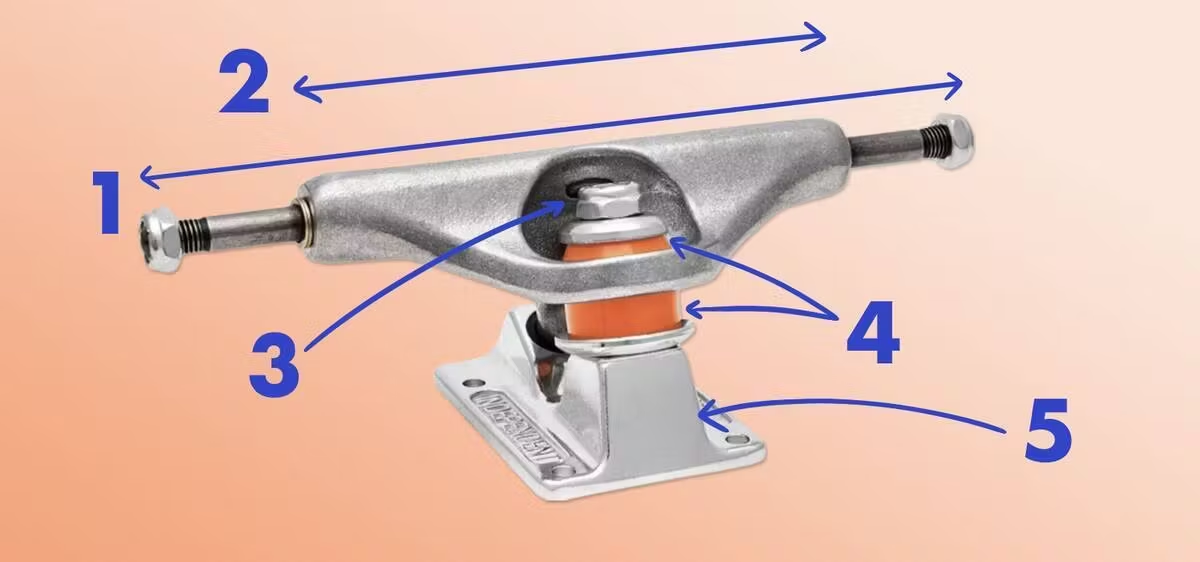
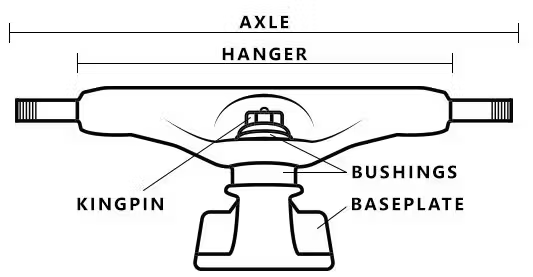
Before diving into the specifics, a basic understanding is essential. Essentially, skateboard trucks are the metal T-shaped components attached to the deck's underside. They hold the wheels and comprise two main sections that swivel or rotate: the baseplate and the hanger. A bolt — the kingpin — secures these together, also supporting the bushings. Let's dissect the skateboard truck components:
Baseplate
This flat metal part bolts directly to the deck with four screws. The baseplate balances the skater’s weight across the entire truck for improved stability and reduces landing impact on the deck. It also houses the pivot cups, crucial for the hanger’s smooth turning capability. Given it links the deck to the hanger, the baseplate is vital to your skateboard's functionality.
Hanger
The hanger is the largest skateboard truck part, shaped like an elongated bar that turns triangular near the pivot, which fits into the baseplate’s pivot cup. Hangers come into direct contact with rails, copings, and ledges, playing a significant role in grind tricks.
Axle
The axle runs through the hanger and is marked by threading at both ends, where nuts secure the wheels. Axle threads can wear, especially if you frequently do rail stands, but can be restored with the proper tools. Many T-tools have 5/16" axle re-threaders. If axle re-threading is something you've done before, consider a skate tool with this feature. Check out our collection:
Kingpin
This hefty bolt traverses the truck, holding all parts together, allowing for adjustable trucks via the kingpin nut. Kingpins may fracture under stress but are replaceable.
Truck Bushings
Found between the baseplate and hanger, bushings absorb the pressure from your feet, affecting your setup's nimbleness. The hardness of these bushings influences turning dynamics:
- Hard bushings: Offer stability, ideal to counteract wobbles with more effort needed for turns.
- Soft bushings: Perfect for carving and cruising, delivering quick responses in loose trucks.
Learn about skateboard bushing installation or shop for new bushings, washers, or hardware here:
Armed with knowledge of skateboard truck parts, let’s look at choosing suitable trucks for your skateboard setup.
Understanding and Measuring Skateboard Truck Sizes
Skateboard truck sizes depend on width and height. This segment offers a concise guide to help you select suitable skateboard truck sizes.
Width of Skateboard Trucks
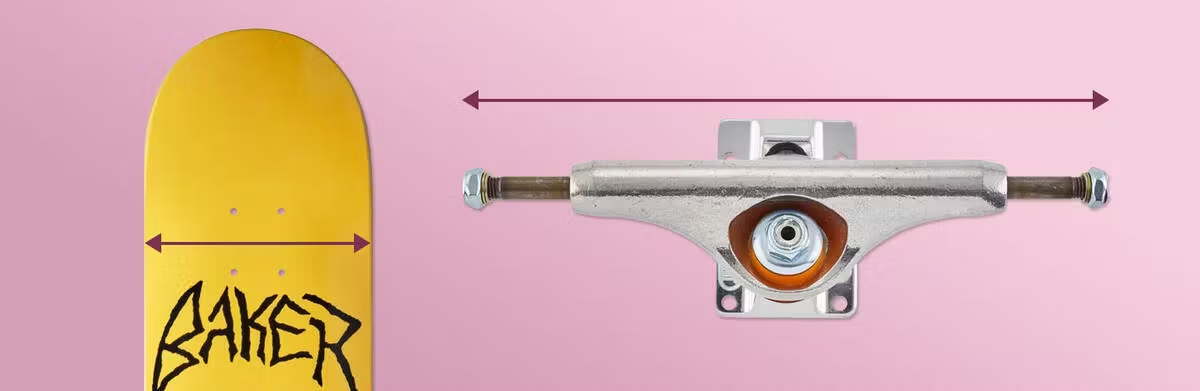
Matching truck width to deck width is paramount. Avoid too-narrow trucks for stability or overly-wide trucks that could hinder shoe movement while pushing and complicate flip tricks.
Manufacturers indicate truck size with numbers reflecting hanger width, excluding axle width, which defines overall truck width — ideally matching to the deck's width.
At SkatePro, individual trucks' axle widths are listed, sparing you from using charts that convert manufacturer's measurements to inches.
Truck Height on Skateboards

Truck height, or profile, shows how far the trucks are off the deck. Height choices affect the gap between deck and wheels and between deck and ground.
Available in high, medium, or low, skate trucks come with distinct features:
- Low Trucks (46-49 mm): Provide a stable feel due to proximity to the ground, suitable for kids, beginners, and shorter skateboarders. Wheels exceeding 53 mm demand risers for distancing from the deck.
- Mid Trucks (49.5-53.5 mm): Positioned between high and low trucks at 49.5-53.5 mm, they offer versatility, serving as a reliable option for numerous skaters. Avoid wheels over 56 mm without risers.
- High Trucks (53.5-60 mm): Offer ample clearance for larger wheels, ideal for cruising and carving. Elevate freestyle platforms for better balance during tricks like rail stands.
Specifications for truck height are detailed in our product listings.
Factors in Choosing Skateboard Truck Height
Truck height is subjective, influenced by your skateboarding style and physical attributes. Consider these when selecting your trucks:
- Wheel clearance: The gap between wheels and deck depends on wheel size and truck height. Carving enthusiasts or those preferring loose trucks should ensure adequate clearance.
- Pop angle: Taller trucks provide a broader pop angle, aiding in high tricks. While lower trucks engage more quickly, elevating manoeuvrability for flatter land tricks.
- Pushing: Greater truck height increases distance between your pushing foot and deck foot, impacting comfort during extended pushing.
- Tricks: Truck height influences trick execution — higher trucks benefit rail and truck stands, while lower agility assists flatland flips.
- Truck weight: Heavier trucks equate to larger size.
- Personal height: Taller individuals gain more control with high trucks compared to shorter skaters.
Enhance Truck Height and Avoid Wheel Bites with Riser Pads

Skateboarders facing wheel bites, when wheels meet the deck in sharp turns, can benefit from riser pads. They elevate decks for increased wheel clearance, offering a cost-effective solution.
If experimenting with bigger wheels or looser trucks intrigues you, explore our riser pads for further adjustment.
For wheel bite prevention or performance adjustment, check our riser pad selection:
Ensure using appropriate hardware during riser pad installation. Refer to this guide to confirm suitable bolt lengths:
Weighing Skateboard Truck Options: Heavy vs. Light
As substantial contributors to skateboard weight, truck design innovations have focused on weight reduction, through hollowed kingpins and axles or new materials.
Currently, the Tensor Mag Light Series, claiming to be the “lightest trucks ever,” lead the market. Lighter trucks enhance trick performance but weight disparities might not be as prominent as other truck attributes.
Remember, larger trucks weigh more. Evaluate truck weight considering wheel size and deck dimensions.
Fine-Tune Your Skateboard Trucks: Loose vs. Tight
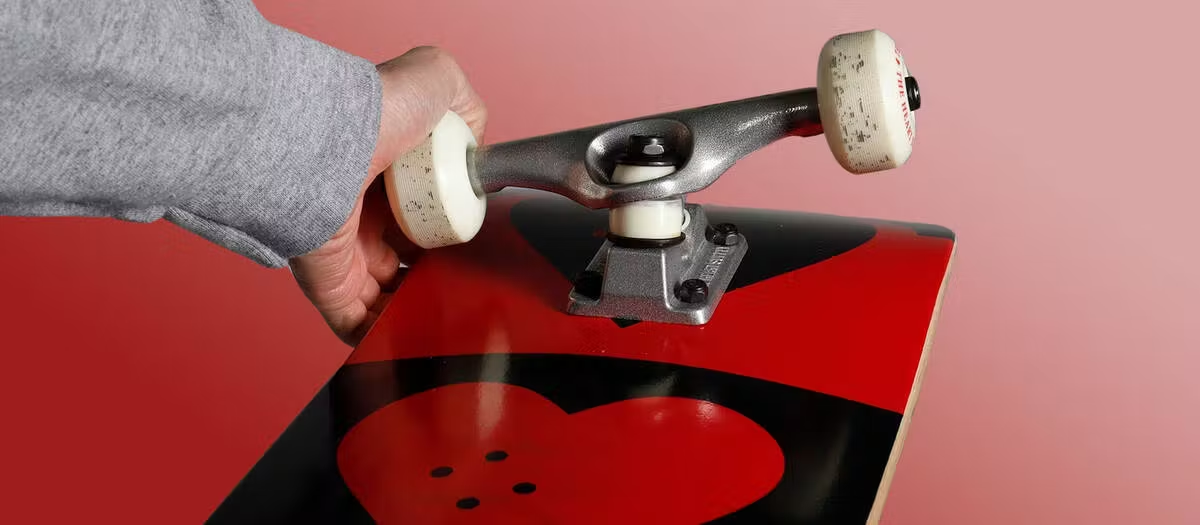
Modify your skateboard’s trucks by adjusting the kingpin nut with a skate tool, wrench, or spanner. Tightening restricts turns but stabilizes, while loosening boosts agility and responsiveness.
Adjust tighter if:- Experiencing wheel bites.
- Desiring consistent pop.
- Feeling instability at higher speeds.
- Front wheels lift during turns.
- Sharp turns are desired.
- Greater sidelong freedom is needed.
Bushing hardness also affects turns and carving, each serving varying hardness levels measured on a durometer scale. Harder bushings mean tighter trucks. Explore our bushing collection:
- Skateboard Bushings
- Guide: Adjust Your Trucks for Better Control
- Skateboard Bushings - Everything You Need to Know
Installing Skateboard Trucks
```Fasten each truck using four nuts and bolts. It's advised to tighten the bolts in a crisscross diagonal sequence to ensure the baseplate is evenly secured.
Our assistance is always at your disposal: